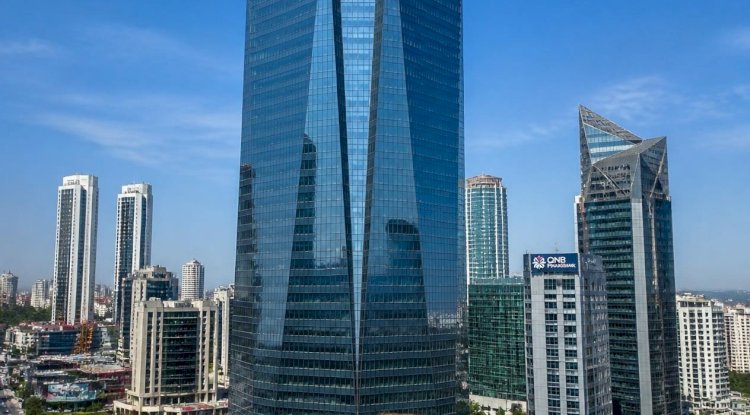
How Is the Hybrid Work Model Transforming Plaza Offices in Besiktas?
Since employees work remotely part of the time, there is no longer a need for office spaces as large as before. At the same time, compliance with earthquake regulations is a crucial criterion for office tower buildings. The adaptability of the office floor plan to various uses and the ability to easily modify it are now among the factors companies consider.
The hybrid work model, which took hold in the business world following the pandemic, is evolving from a temporary measure into a permanent working arrangement for many companies.
Advancements in technology, the development of remote communication infrastructure, and the widespread adoption of digital work tools are driving this transformation.
This new working model has also begun to significantly alter companies' office requirements and commercial real estate preferences.
More Efficient Offices Rather Than Larger Ones
One of the most significant impacts of the hybrid work model on the Beşiktaş plaza office market is that companies no longer require office spaces as large as they once did.
Having employees work remotely on certain days enables companies to create more efficient workspaces within a smaller footprint.
However, a significant shift is taking place here:
While the need for square footage is decreasing, expectations regarding the quality of the office space are rising.
Within these smaller office spaces, companies are seeking:
More efficient floor plans,
Meeting and collaborative areas,
Social spaces that enhance the employee experience,
Technological infrastructure,
Modern architecture,
Work environments that reinforce the corporate brand image.
Consequently, in plaza offices, space utilization efficiency and office quality are taking precedence over sheer square footage.
Earthquake Safety Is Now a Key Criterion
Earthquake safety and a building's technical infrastructure are becoming increasingly important factors in commercial real estate decisions in Istanbul.
For corporate firms in particular, a plaza building's compliance with current earthquake regulations and relevant technical requirements is becoming a fundamental criterion when selecting office space.
Consequently, new-generation or technically upgraded Class A plaza offices can hold a more advantageous position compared to older office buildings.
Flexible Floor Plans Gain Value
Another impact of the hybrid work model is the rising demand for flexible office floor plans.
Corporate organizational structures and workforce sizes can change over time.
Therefore, the ability of an office floor to:
Adapt to different work scenarios,
Be subdivided,
Accommodate a mix of open-plan and private workspaces, and
Allow for the reconfiguration of meeting and collaborative areas
is becoming increasingly important.
In other words, plaza offices that can easily adapt to changing corporate needs offer a distinct operational advantage.
Location and Accessibility Remain Critical
Despite the trend toward smaller office footprints, the importance of location has not diminished; on the contrary, it has grown.
Plaza buildings situated in central locations—easily accessible to employees, clients, and business partners—offer significant advantages for companies.
The Beşiktaş–Büyükdere Avenue axis, in particular, remains a strong option for corporate office tenants due to:
Its metro and public transport connections,
Proximity to central business districts,
Access to major transportation arteries, and
The availability of high-quality commercial real estate stock.
International Certifications and Building Quality
Another factor corporate tenants consider when selecting a plaza is adherence to international building standards and sustainability criteria. Plaza buildings holding international certifications that support energy efficiency, environmental performance, building management, technical infrastructure, and employee comfort can become more attractive, particularly to corporate and international companies.
This indicates that, for plaza offices, not only the location but also the building's technical and operational quality are significant factors influencing the decision to rent.
Less Square Footage, More Prestige
One notable outcome of the hybrid work model is that companies have begun to repurpose the office space they save—in terms of square footage—in different ways.
As some companies transition to smaller office spaces, they are able to redirect the resulting cost savings toward more prestigious locations and higher-quality office tower buildings.
This approach is becoming particularly evident among companies that prioritize their brand image.
While operating in a smaller footprint, companies may choose to offer:
better locations, higher-quality buildings, stronger brand perception, and a superior work experience for their employees.
Consequently, the hybrid work model does not merely reduce the demand for office tower space;
it transforms the nature of that demand.
Beşiktaş’s Büyükdere Avenue Stands Out
The Büyükdere Avenue corridor in Beşiktaş is a key commercial real estate area where this transformation can be closely observed.
The shift of corporate firms toward more central, accessible, technically robust, and prestigious office towers reinforces the importance of high-quality commercial real estate along this axis.
Therefore, in the future office tower market, simply asking "how many square meters?" will no longer suffice.
The essential questions will be:
How efficiently can the office space be utilized?
How secure and technically advanced is the building?
How accessible is the location?
How easily can the floor plan adapt to future needs?
And how much does the building contribute to the company's brand image?
When evaluating the impact of the hybrid work model on the Beşiktaş office tower market from this perspective, I believe that smaller yet higher-quality, more flexible, more central, and more prestigious offices will gain increasing importance in the period ahead.
What's Your Reaction?